Minister of Education, Science and Technology Bright Msaka says the school feeding-programme is crucial for increasing enrolment and reducing dropouts in schools.
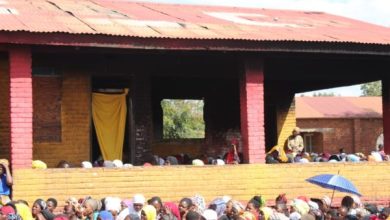
He said this on Thursday during the launch of a three-month emergency school meals programme at Namadidi Primary School in Zomba implemented by World Food Programme.
Msaka noted that hunger significantly hampers educational quality, stating that many families experience food scarcity from January to March, which prompted President Peter Mutharika to declare a State of National Disaster in October last year.

| Wisdom Chirombo
“One of the major challenges to children’s education is hunger. This programme will motivate learners to attend classes,” he said.
Msaka also revealed government’s plans to ensure that all primary schools benefit from the programme by 2030.
The minister commended WFP and development partners for supporting the programme.
WFP country director Hyoung-Joon Lim affirmed the organisation’s commitment to collaborate with the government to combat hunger in the country.
On her part, Ireland Ambassador Kate Brady expressed her satisfaction with the collaboration among stakeholders in implementing the programme.
She acknowledged the global challenges presented by humanitarian crises, emphasising Ireland’s ongoing commitment to Malawi.
“We have increased our support to Malawi and intend to maintain that for many years,” she said.
Brady further said a recent contract signed with the United Nations Children’s Fund valued at $1 million will address acute malnutrition among under-five children.
On her part, United Nations (UN) resident coordinator Rebecca Adda-Dontoh called for continued collaboration among stakeholders to support the initiative.
“While the programme serves as an emergency response, it is also an investment in resilience mechanism,” she said.
Dontoh assured of the UN’s commitment to achieving zero hunger in Malawi, focusing on sustainable programmes that benefit communities.
The three-month programme runs from January to March 2026, targeting primary schools and early childhood development centres in Phalombe, Chikwawa, Nsanje, and Zomba districts